Aldeburgh Town Council

About East Anglia TWO North Offshore Windfarm

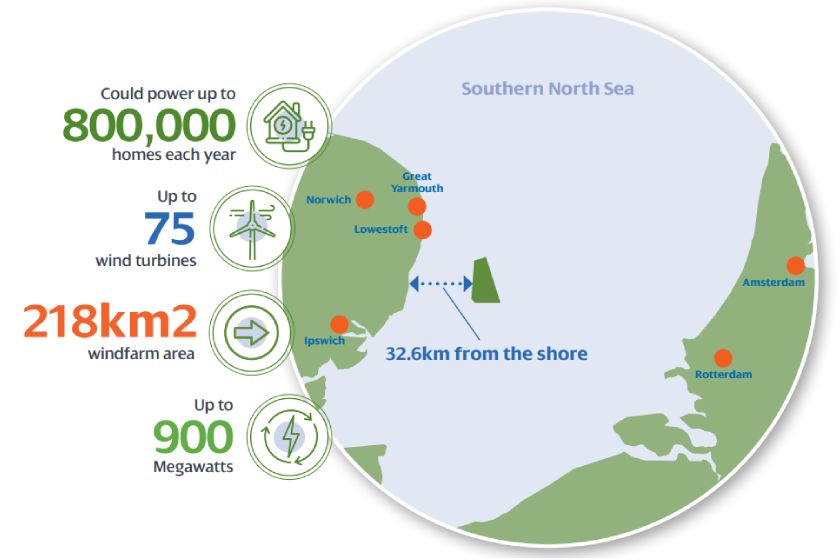
East Anglia TWO Ltd is developing an offshore windfarm in the southern North Sea approximately 32.6km from the Suffolk coast at its nearest point off Southwold and 37.5km to Lowestoft. The project is anticipated to have an operational capacity around to 900MW [1] which is enough to power approximately 800,000[2] UK households.

The windfarm has the potential to make a substantial contribution to UK 2030 energy targets by meeting nearly 5% of the UK offshore wind cumulative deployment target for 2030.

  •  
  •  
  • Public highways – a number of road improvements or modifications will be required to facilitate the ingress and egress from the public highways for construction access or at locations on the existing public road network in order to facilitate construction traffic and/or construction-related deliveries.
  • Onshore substation – a maximum building height of 14m and external electrical equipment of up to 14m in height(with the exceptionof lightning protection masts)from finished ground level is proposed and the substation will cover an area of 32,300m2 (190x170m).  
  • National Grid substation – to accommodate the electricity produced by East Anglia TWO (and East Anglia ONE North) an Air Insulated Switchgear (AIS) or Gas Insulated Switchgear (GIS) substation would be required. The maximum height of the AIS would be 6m with a footprint of 145x310m and the maximum height of the GIS would be 16m with a footprint of 120x140m.
  • National Grid realignment works – up to one additional pylon within the vicinity of the National Grid substation as well as up to three cable sealing end compounds, up to one cable sealing end (with circuit breaker) compound, and potentially additional strengthening or modification works within the overhead line realignment works area will be required for East Anglia TWO (and East Anglia ONE North).

Offshore development

The offshore development area comprises of:

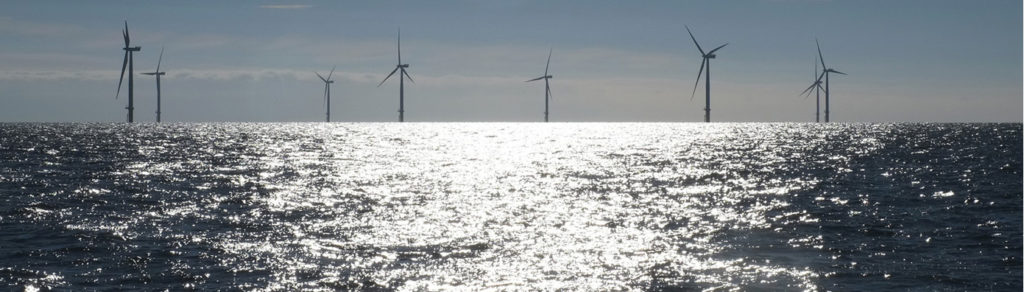
  • Wind turbines – up to 75 wind turbines would cover an area of 218.4km2. The maximum height to the blade tip would be 282m above sea level.
  • Offshore platforms – up to four electrical platforms connected by platform link cables to collect the electricity, a construction, operation and maintenance platform and a meteorological mast.
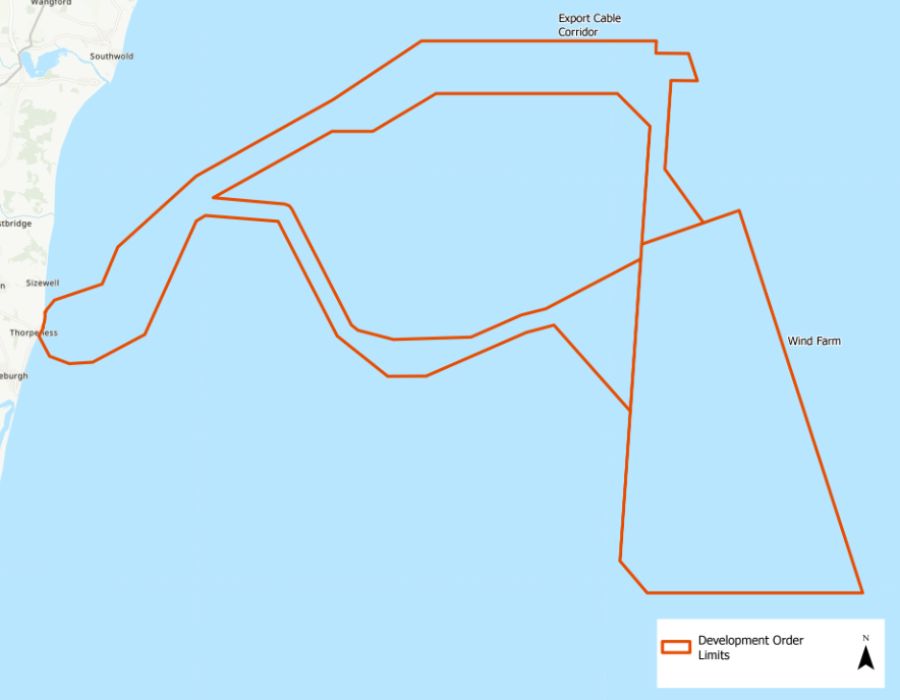
  • Subsea cables – inter-array cables connect the turbines to the offshore electrical platform. A maximum of two export cables, buried or protected on the seabed will then transport the electricity to shore. The two cable routing options are the preferred choice in terms of engineering and environmental constraints.  

Onshore development

The onshore development area comprises of:

  • Landfall location – Horizontal Directional Drilling (HDD) will be required to install the ducts to avoid any construction works on the beach, and a minimum setback distance of 85m from the cliff top will allow for natural coastal erosion based on the potential 100-year erosion prediction and will not compromise the integrity of the cliff. 
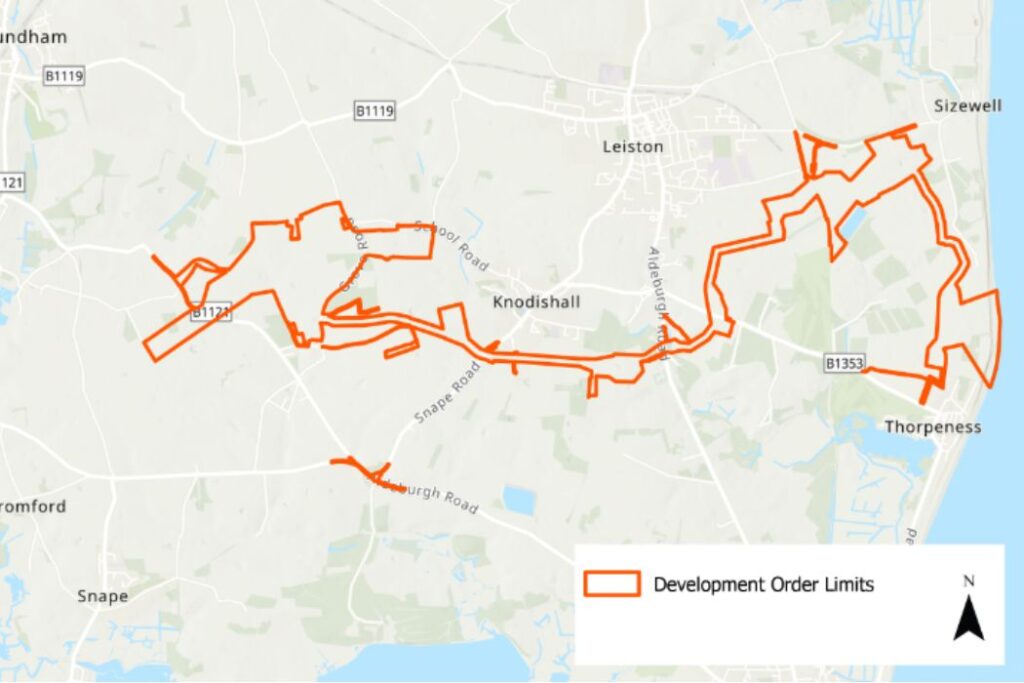
  • Underground cables – up to six single core onshore cables will be buried for a maximum of 9km. For the majority of the route, trenching will be undertaken in which to place the ducts through which the cables are pulled.
  • Public highways – a number of road improvements or modifications will be required to facilitate the ingress and egress from the public highways for construction access or at locations on the existing public road network in order to facilitate construction traffic and/or construction-related deliveries.
  • Onshore substation – a maximum building height of 14m and external electrical equipment of up to 14m in height(with the exceptionof lightning protection masts)from finished ground level is proposed and the substation will cover an area of 32,300m2 (190x170m).  
  • National Grid substation – to accommodate the electricity produced by East Anglia TWO (and East Anglia ONE North) an Air Insulated Switchgear (AIS) or Gas Insulated Switchgear (GIS) substation would be required. The maximum height of the AIS would be 6m with a footprint of 145x310m and the maximum height of the GIS would be 16m with a footprint of 120x140m.
  • National Grid realignment works – up to one additional pylon within the vicinity of the National Grid substation as well as up to three cable sealing end compounds, up to one cable sealing end (with circuit breaker) compound, and potentially additional strengthening or modification works within the overhead line realignment works area will be required for East Anglia TWO (and East Anglia ONE North).

Comments are closed.

Aldeburgh Town Council
Privacy Overview

This website uses cookies so that we can provide you with the best user experience possible. Cookie information is stored in your browser and performs functions such as recognising you when you return to our website and helping our team to understand which sections of the website you find most interesting and useful.